 +86-13376814803
 robert@hzhongtai.com


Mold contamination in cannabis is a serious post-harvest issue. Whether you’re a home grower or managing a commercial drying room, discovering mold on cured flower requires a disciplined, safety-first response.
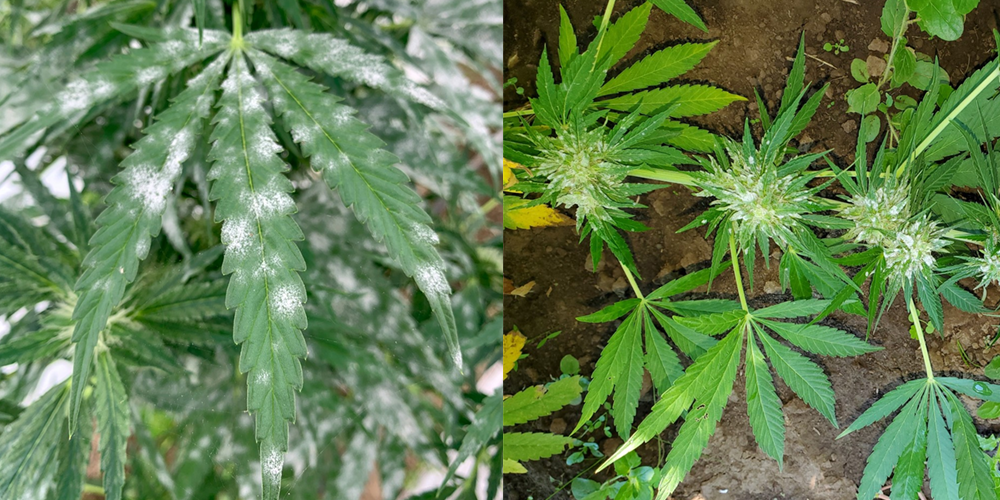
1. What Does Moldy Weed Look Like?
Key Visual Indicators
|
Mold |
Trichomes (Normal) |
|
White/gray fuzzy webbing |
Frosty, crystal-like glands |
|
Dusty powder (powdery mildew) |
Sticky, resinous texture |
|
Brown/black dead spots |
Uniform green/purple coloration |
|
Musty or ammonia smell |
Pungent, strain-specific aroma |
Common cannabis molds include:
Botrytis cinerea (Bud rot)
Golovinomyces cichoracearum (Powdery mildew)
Once fungal mycelium penetrates the bud structure, contamination is systemic—not superficial.
2. Can You Save Moldy Weed?
In almost all cases, no — it should be discarded.
Mold produces:
Microscopic spores (airborne and pervasive)
Mycotoxins (potentially harmful metabolites)
Internal contamination is not visible
Even if you remove the visibly affected portion, spores likely spread throughout the jar, drying room, or entire plant.
Health Risks of Smoking Moldy Cannabis:
Lung irritation
Allergic reaction
Fungal infection (especially in immunocompromised users)
Exposure to mycotoxins
Inhalation risk is particularly serious because combustion does not reliably neutralize fungal toxins.
3. Are There Any Situations Where It Can Be Salvaged?
In strictly limited scenarios:
Case 1: Very Early, Isolated Spot
If:
Mold is detected extremely early
Only one small bud is affected
No webbing or internal rot visible
You may:
Remove the entire affected bud.
Inspect adjacent buds under magnification.
Lower RH immediately to ≤ 50%.
Increase airflow.
However, for commercial growers or quality-controlled operations, even this is typically a full batch discard.
Case 2: Extraction Processing?
Some ask whether moldy flowers can be processed into concentrates.
This is not recommended.
Many mycotoxins survive extraction processes and can become concentrated in final products.
4. What You Should Do Immediately
If you find mold:
Isolate the batch.
Stop curing immediately.
Do not attempt to dry it further.
Discard contaminated material safely.
Sanitize jars, tools, and drying space.
Use:
Isopropyl alcohol (70%+)
Proper air exchange
HEPA filtration, if possible
5. Why Mold Happens (Root Causes)
Mold thrives under specific environmental conditions:
|
Factor |
Risk Threshold |
|
Relative Humidity |
> 60% during curing |
|
Drying Room RH |
> 55% |
|
Dense colas |
Poor internal airflow |
|
Temperature |
68–77°F (optimal for fungi) |
|
Inadequate airflow |
Stagnant microclimate |
Late flowering stages are particularly vulnerable when buds are dense, and transpiration continues.
6. How to Prevent Mold in Future Harvests
1) Control Humidity Precisely
Dry at 50–55% RH
Cure at 58–62% RH
Avoid fluctuations
2) Maintain Air Movement
Oscillating fans (not directly on buds)
Exhaust exchange
3) Environmental Monitoring
Use:
Calibrated hygrometers
External humidity sensors
Data logging if operating at scale
4) Dehumidification Strategy
For grow tents:
Size dehumidifier based on canopy volume and plant count.
Account for transpiration load during late flower.
For commercial facilities:
Professional dehumidification systems, including commercial dehumidifiers for grow room and fans
Integrated HVAC with humidity control
Redundancy planning
5) Inspect Daily During Late Flower
Early detection is the only chance to limit loss.
If cannabis is visibly moldy, the safest and most responsible action is disposal. The financial loss is unfortunate, but respiratory health is not negotiable.
Post time: Feb-25-2026


