 +86-13376814803
 robert@hzhongtai.com


Most modern dehumidifiers do turn off automatically. In fact, automatic shut-off is a core design feature in today's residential and commercial units. But automatic shut-off isn't just about convenience. It reflects intelligent humidity control, energy efficiency engineering, and equipment protection design. This article explains how automatic shut-off works — and highlights the advanced features that make modern dehumidifiers reliable, safe, and efficient.
1. How Automatic Shut-Off Works
Most dehumidifiers shut off automatically for three primary reasons:
1) Humidity Target Reached
Built-in humidistats monitor relative humidity (RH). When your set point (e.g., 50% RH) is reached, the compressor shuts off, the fan may continue briefly, and the unit restarts when RH rises again. This cycling maintains stable humidity without constant operation.
2) Water Tank Full
If using bucket collection, a float switch detects a full reservoir, then the unit powers down. “Full Tank” indicator activates. This prevents overflow and water damage.
3) Low-Temperature Protection (Auto Defrost)
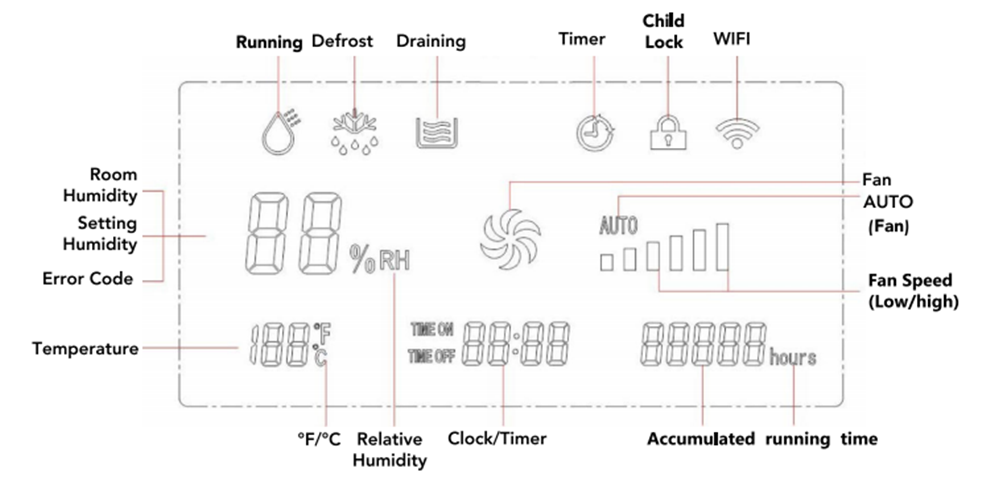
When coils approach freezing, the compressor pauses, and the defrost cycle activates. When the temperature returns to the normal range, the dehumidification system resumes automatically. This protects internal components and maintains efficiency in cooler environments.
2. Key Automatic Features That Add Value
Modern dehumidifiers are far more than simple moisture extractors. Below are the high-value automatic functions that improve performance and reliability.
Intelligent Humidistat Control
A built-in humidistat continuously measures ambient RH and regulates operation accordingly.
Benefits:
Prevents over-drying
Reduces energy consumption
Extends compressor lifespan
Maintains precise environmental stability
For applications like grow rooms or storage garages, this precision is critical.
Continuous Drain + Auto Restart
When connected to the gravity drain, floor drain, or a condensate pump, the unit can run continuously without manual intervention.
In addition, many models feature:
Auto Restart After Power Outage
Remembers the last settings
Resumes operation automatically
Critical for unattended spaces
This feature is especially important in basements, crawlspaces, and commercial facilities.
Programmable Timers
Timer functions allow users to:
Delay start
Schedule shutdown
Optimize off-peak energy usage
This is useful for garages, vacation homes, or intermittent moisture control.
Automatic Defrost System
Standard units pause periodically in cold environments.
Higher-end units use: Intelligent defrost sensors; Temperature-based cycling; Optimized compressor management
This ensures:
Stable operation in low temperatures
Reduced downtime
Improved energy efficiency
Overflow & Tilt Protection
Many modern units include:
Automatic shut-off if tipped
Overflow prevention systems
Internal safety cut-offs
These features increase safety, particularly in workshops and unfinished spaces. Preair LGR dehumidifiers have all these good features and can be controlled through WiFi and set on the App.
3. Do All Dehumidifiers Turn Off Automatically?
Dehumidifiers made by Preair all have the following pro-user functions:
Precision humidistats
Memory auto-restart
Smart defrost systems
When selecting a unit, confirm it includes:
Adjustable humidistat
Full tank auto shut-off (if it has a water tank)
Auto defrost
Auto-restart capability
These are baseline expectations for reliable humidity control.
4. Why Automatic Shut-Off Is Important
Energy Efficiency
Continuous operation wastes electricity. Automatic cycling:
Reduces runtime
Minimizes compressor wear
Lowers operating cost
Equipment Longevity
Compressors are high-load components. Smart cycling prevents:
Overheating
Excessive runtime
Premature failure
Mold Prevention
Consistent humidity regulation prevents:
Spikes above 60% RH
Condensation events
Mold growth in enclosed spaces
Peace of Mind
In basements, garages, grow rooms, or storage areas, users need unattended reliability. Automatic features provide hands-off environmental control.
5. When Should a Dehumidifier Run Continuously?
There are scenarios where continuous mode is preferred:
Flood restoration
Extremely wet basements
New construction drying
High-transpiration grow rooms
In those cases, industrial or LGR units are often used because they are engineered for sustained load operation.
Modern dehumidifiers are designed to turn off automatically. Automatic shut-off isn’t just a convenience feature — it’s fundamental to safe, precise, and long-term moisture control.
Post time: Feb-25-2026


