 +86-13376814803
 robert@hzhongtai.com

The 2026 El Niño phenomenon is an important climate factor to watch as communities across the United States prepare for changing weather patterns. From heavy rainfall and potential flooding to drought conditions and shifting winter temperatures, El Niño can influence regional weather risks, water management, agriculture, and building maintenance.
For homeowners, commercial property managers, and water damage restoration professionals, understanding these potential impacts is essential. Excess moisture can lead to flooded basements, wet building materials, mold growth, and costly restoration work. Reliable water damage restoration equipment, including commercial dehumidifiers and air movers, can help accelerate structural drying after water intrusion.
In this article, we explore how the 2026 El Niño phenomenon may affect the United States, which regions could face elevated moisture-related risks, and how PREAIR water damage restoration dehumidifiers can support recovery efforts.
1. What Is El Niño and Why Does It Matter in 2026?
El Niño is a climate phenomenon characterized by warmer-than-average sea surface temperatures in the central and eastern equatorial Pacific Ocean. It is part of the El Niño–Southern Oscillation (ENSO), a natural climate pattern that also includes La Niña and neutral phases.
El Niño changes atmospheric circulation and influences the position of the jet stream, storm tracks, and tropical circulation patterns. These changes can affect temperature and precipitation across different parts of the United States.
However, El Niño does not produce the same weather conditions everywhere. Its effects depend on its strength, timing, seasonal development, and interactions with other climate patterns.
For 2026, businesses and property owners should monitor official seasonal outlooks from the National Oceanic and Atmospheric Administration (NOAA) and the National Weather Service (NWS). These forecasts provide more useful regional guidance than assuming that El Niño will automatically cause flooding, drought, or extreme temperatures.
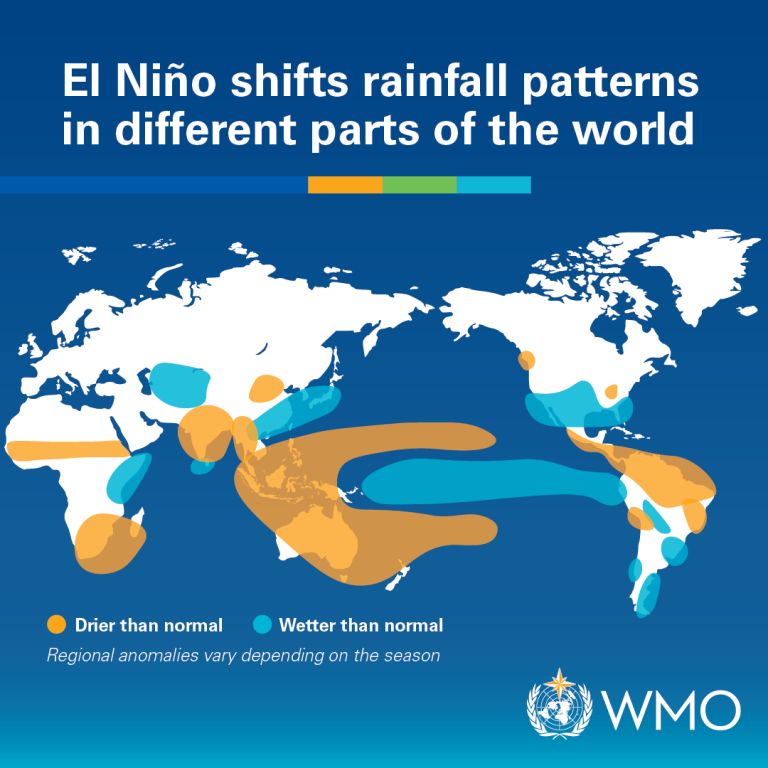
2. Potential Impacts of El Niño on Different U.S. Regions
2.1 Southern United States: Increased Rainfall and Flooding Risks
During many El Niño winters, the southern United States experiences a more active storm track, which can increase opportunities for rainfall across parts of the Gulf Coast and the southern tier of the country.
States such as California, Arizona, Texas, Louisiana, Mississippi, Alabama, and Florida may experience different precipitation patterns depending on the season and the broader atmospheric setup. Not every state will necessarily receive above-average rainfall, and local conditions can vary substantially.
When intense rainfall occurs, the potential consequences include:
Flash flooding in low-lying areas and urban neighborhoods.
Water intrusion through roofs, windows, foundations, and basement walls.
Flooded crawl spaces, garages, warehouses, and commercial buildings.
Saturated insulation, drywall, flooring, and other porous materials.
Increased risk of mold growth when wet materials are not dried promptly.
Even a short period of heavy rainfall can create significant moisture problems when storm drains are overwhelmed or groundwater levels rise.
For restoration contractors, having commercial dehumidifiers, air movers, moisture meters, and appropriate water extraction equipment ready can help reduce delays after a flood event.
2.2 California and the Western United States: Rainfall, Snowpack, and Runoff
El Niño is often associated with wetter winter conditions in parts of the southern United States, including Southern California. However, its influence on the West is not uniform, and it cannot predict the exact timing or location of individual storms.
In California, prolonged or intense rainfall can contribute to saturated soils, urban flooding, landslides, and water intrusion into residential and commercial properties. In mountainous areas, snowpack and subsequent snowmelt may also influence runoff and reservoir conditions.
Potential property-related problems include:
Basement and crawl space flooding.
Roof leaks and moisture accumulation in attics.
Water damage to commercial flooring and interior walls.
Persistent dampness in storage rooms and utility spaces.
Delayed drying in buildings with limited ventilation.
A strong storm can also expose existing drainage and waterproofing weaknesses. Property owners should inspect roof drainage systems, gutters, sump pumps, foundation drainage, and vulnerable building openings before periods of heavy precipitation.
2.3 Northern United States: Changing Winter Temperatures and Precipitation
The northern United States may experience changes in winter temperature, snowfall, and storm patterns during El Niño. Some regions may see milder conditions, while others can still experience severe cold, snowstorms, or freezing rain.
Temperature fluctuations can create additional moisture-management challenges. Snowmelt, rain on frozen ground, plumbing leaks, and condensation may contribute to indoor water problems.
For property managers, preparation should include checking plumbing insulation, inspecting roof drainage, monitoring indoor relative humidity, and ensuring that water damage restoration equipment is available when needed.
2.4 Southeastern United States: Storm Damage and Building Moisture
The Southeast faces a combination of heavy-rainfall events, high outdoor humidity, and seasonal storm risks. Although El Niño often reduces Atlantic hurricane activity by increasing vertical wind shear, it does not eliminate the possibility of tropical storms or hurricanes.
Heavy rain and severe thunderstorms can still cause roof leaks, localized flooding, and water intrusion. Once water enters a building, warm and humid indoor conditions may make drying more difficult.
Commercial facilities, schools, hotels, healthcare buildings, and warehouses should pay particular attention to moisture detection and post-storm drying procedures.
3. How the 2026 El Niño Phenomenon Could Affect Flooding and Water Damage
El Niño is not a direct cause of every flood. Instead, it can influence the large-scale weather patterns that help determine where storms develop and how frequently they occur.
Flooding risk also depends on local rainfall intensity, soil saturation, terrain, drainage infrastructure, river levels, and land development.
The following moisture-related problems deserve attention when heavy rainfall or flooding is forecast.
3.1 Basement and Crawl Space Flooding
Basements and crawl spaces are vulnerable to groundwater intrusion, foundation seepage, and inadequate drainage. Repeated rainfall can increase moisture in these areas even when a property does not experience major flooding.
Standing water should be removed promptly, and the affected area should be assessed for electrical hazards, contaminated floodwater, and damaged building materials. After safe water extraction, appropriate drying equipment can help reduce residual moisture.
3.2 Mold Growth After Water Intrusion
Mold can begin growing on damp materials within approximately 24–48 hours under favorable conditions. The exact timeline depends on temperature, material type, moisture availability, and other environmental factors.
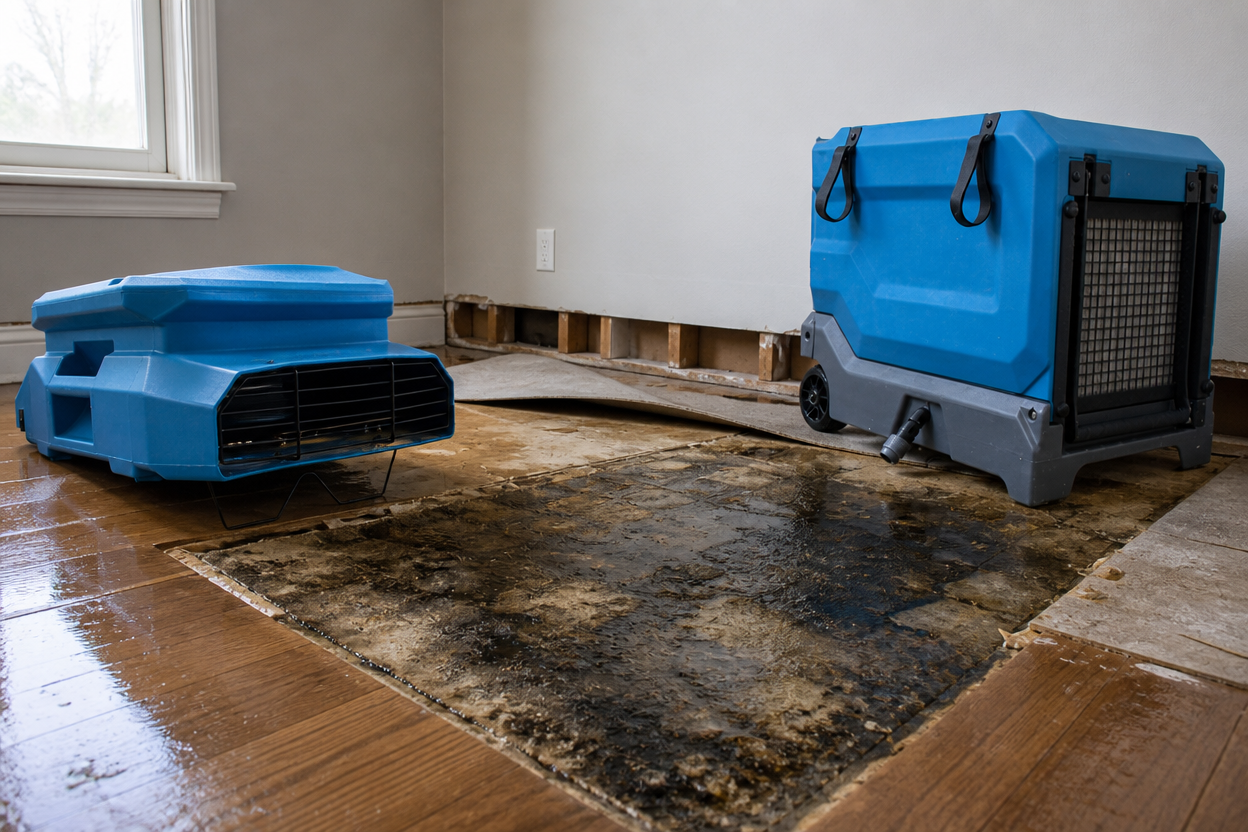
Drying wet materials quickly is therefore a key part of water damage restoration. Commercial dehumidifiers help remove water vapor from indoor air, while air movers increase airflow over wet surfaces. Together, these tools can support more efficient drying when used as part of a properly designed restoration process.
Dehumidification alone cannot replace removal of standing water, contaminated materials, or building components that cannot be adequately cleaned and dried.
3.3 Damage to Commercial and Industrial Facilities
Flooding can disrupt business operations, damage inventory, and delay production. Warehouses, manufacturing plants, retail buildings, offices, and agricultural facilities may all be affected by water intrusion.
Common consequences include:
Wet packaging, stored goods, and raw materials.
Increased indoor humidity and condensation.
Damage to flooring, drywall, insulation, and wooden structures.
Corrosion risks for metal equipment and electrical components.
Downtime while affected spaces are inspected and restored.
A prepared restoration plan can help businesses respond faster, protect recoverable assets, and reduce the duration of facility downtime.
4. How PREAIR Water Damage Restoration Dehumidifiers Can Help
When flooding or storm-related water intrusion affects a building, removing visible water is only the first step. Moisture trapped in walls, floors, insulation, and other materials must also be addressed.
PREAIR offers water damage restoration dehumidification equipment designed for professional drying applications. Its LGR dehumidifier series can be incorporated into restoration workflows where high moisture-removal performance and dependable operation are required.
4.1 LGR Dehumidifiers for Structural Drying
Low Grain Refrigerant (LGR) dehumidifiers are commonly used in professional water damage restoration because they can remove moisture efficiently from indoor air under suitable operating conditions.
Following water extraction, an LGR dehumidifier helps lower indoor humidity and supports the evaporation of moisture from damp building materials. As moisture evaporates into the air, the dehumidifier collects water and helps maintain conditions conducive to drying.
PREAIR LGR restoration dehumidifiers may be suitable for applications such as:
Drying flooded basements and crawl spaces.
Restoring water-damaged residential properties.
Drying commercial buildings after roof leaks or plumbing failures.
Supporting restoration work in offices, retail spaces, and warehouses.
Managing residual moisture after storm-related water intrusion.
Actual performance depends on ambient temperature, relative humidity, water load, airflow, equipment capacity, and the characteristics of the affected materials. Contractors should select equipment based on a site assessment rather than relying on floor area alone.
4.2 Air Movers for Faster Surface Drying
Air movers are another important component of water damage restoration. They direct airflow across wet floors, walls, and other surfaces, helping moisture evaporate into the surrounding air.
When combined with appropriately sized PREAIR dehumidification equipment, air movers can support a coordinated structural drying strategy.
A typical restoration workflow includes:
Assess the site and identify safety hazards.
Extract standing water using suitable equipment.
Remove materials that are contaminated or cannot be restored.
Position air movers to improve airflow across wet surfaces.
Deploy commercial or LGR dehumidifiers to remove moisture from the air.
Monitor moisture levels and adjust equipment placement as drying progresses.
Verify that affected materials have reached appropriate drying targets.
The exact setup should be determined by trained restoration professionals, particularly after sewage backups, contaminated flooding, or extensive structural damage.
4.3 Equipment for Residential and Commercial Restoration Projects
Different water damage incidents require different equipment capacities and configurations. A small basement leak may need a different drying setup from a flooded warehouse or a large commercial building.
PREAIR's water damage restoration equipment can be considered part of a project-specific solution for contractors and restoration companies. When evaluating a unit, buyers should review its moisture-removal capacity at the relevant test conditions, airflow, operating temperature range, drainage method, portability, and service requirements.
A reliable water damage restoration equipment supplier should also help customers select suitable models for their typical job sizes and working environments.
5. How to Prepare for El Niño-Related Weather Risks in 2026
Property owners and facility managers do not need to wait for a major flood to improve moisture preparedness. Preventive maintenance and an organized emergency response plan can reduce the impact of water intrusion.
Before Heavy Rainfall
Clean gutters and downspouts to prevent drainage blockages.
Inspect roofs, exterior walls, windows, and foundation seals.
Test sump pumps and check basement drainage systems.
Keep valuable inventory and electrical equipment away from flood-prone floors.
Identify safe locations for water extraction equipment and commercial dehumidifiers.
Review emergency contacts and restoration service arrangements.
During a Flood or Severe Storm
Follow local evacuation orders and emergency instructions.
Avoid entering flooded buildings until authorities or qualified professionals confirm that it is safe.
Stay away from water near electrical equipment and downed power lines.
Do not use electrical drying equipment in wet areas unless the setup has been assessed and made safe by qualified personnel.
Document property damage when doing so is safe and permitted.
After Water Intrusion
Arrange appropriate water extraction as soon as conditions permit.
Determine whether the water is clean, gray, or contaminated floodwater.
Have affected materials and electrical systems inspected as necessary.
Use suitable air movers and dehumidifiers as part of a monitored drying plan.
Check moisture levels in building materials rather than relying only on how surfaces feel.
Address the source of water intrusion before returning the building to normal use.
For significant flooding or contaminated water, professional restoration services may be necessary. Drying equipment does not make contaminated materials safe by itself.
6. Why Restoration Contractors Should Prepare Their Equipment in Advance
When a major storm affects a community, demand for water extraction equipment, commercial dehumidifiers, and restoration services can increase quickly. Contractors who wait until an emergency occurs may face equipment shortages, delivery delays, or longer project schedules.
Preparing in advance can provide several advantages:
Faster mobilization: Equipment that is already available can be deployed more quickly after a water intrusion event.
Better project planning: Contractors can match equipment capacity to the moisture load and drying requirements of each job.
More consistent drying: Appropriate combinations of dehumidifiers, air movers, and moisture monitoring equipment help technicians manage the drying process.
Reduced operational disruption: A well-organized response can help property owners and businesses move toward recovery sooner, although actual restoration time depends on the extent of damage and site conditions.
More resilient operations: Restoration companies can review inventory, maintenance schedules, drainage accessories, and supplier relationships before severe weather increases demand.
PREAIR's LGR dehumidifiers and related restoration equipment can be considered by contractors looking to prepare for residential, commercial, and industrial drying projects.
7. How to Choose a Water Damage Restoration Dehumidifier
Selecting the right restoration dehumidifier involves more than comparing advertised daily moisture-removal ratings.
Consider the following factors before purchasing equipment:
| Selection factor | What to evaluate |
| Moisture-removal capacity | Performance under relevant temperature and humidity conditions |
| Airflow | Whether the unit supports effective circulation in the target space |
| Operating conditions | Temperature and humidity limits during restoration work |
| Drainage | Direct drain, pump-assisted drainage, or another suitable arrangement |
| Portability | Weight, handles, wheels, and access through doors and stairways |
| Durability | Construction quality and suitability for frequent professional use |
| Maintenance | Filter access, cleaning, inspection, and service requirements |
| Supplier support | Technical assistance, replacement parts, warranty terms, and lead times |
Restoration contractors should also verify that the selected equipment is suitable for the intended electrical supply and complies with applicable local safety requirements.
PREAIR provides dehumidification equipment for professional applications and can work with customers seeking customized products or project-specific solutions. For restoration businesses serving different property types, a suitable equipment configuration can help address varying drying requirements.
8. Frequently Asked Questions
Will El Niño Cause Flooding in the United States in 2026?
Not necessarily. El Niño can influence regional precipitation and storm tracks, but it does not determine the weather of every location. Flooding depends on local rainfall, drainage, terrain, soil conditions, and other factors. Follow NOAA, the National Weather Service, and local emergency management agencies for current forecasts and flood alerts.
Which U.S. States Could Be Affected by El Niño-Related Heavy Rainfall?
Parts of the southern United States, including portions of California and the Gulf Coast region, can experience increased rainfall during some El Niño winters. However, the effects vary by year, season, and location. A state-by-state assessment should use current seasonal outlooks rather than assume uniform impacts.
Can a Dehumidifier Help After Flooding?
Yes. After standing water has been safely extracted, a suitable commercial or LGR dehumidifier can remove moisture from indoor air and support the drying of damp building materials. It should be used alongside appropriate airflow, moisture monitoring, and any necessary removal of damaged or contaminated materials.
Are PREAIR LGR Dehumidifiers Suitable for Water Damage Restoration?
PREAIR LGR restoration dehumidifiers are designed for professional moisture-control applications and may be suitable for a range of structural drying projects. Buyers should confirm the selected model's specifications, operating limits, and capacity against the job conditions.
Should Restoration Companies Buy Dehumidifiers Before Severe Weather?
Preparation can help contractors respond faster when demand rises after storms or floods. Companies should assess their typical project sizes, maintain existing equipment, check supplier lead times, and ensure that their inventory includes suitable dehumidifiers, air movers, drainage accessories, and moisture-measurement tools.
Conclusion
The 2026 El Niño phenomenon may influence weather patterns across the United States, but its local effects will depend on seasonal conditions and other atmospheric factors. For homeowners and businesses, the practical priority is to monitor reliable forecasts, maintain drainage systems, prepare for water intrusion, and establish a clear recovery plan.
When flooding occurs, rapid water extraction and properly managed structural drying are essential. PREAIR LGR dehumidifiers and air movers can support a professional water damage restoration strategy, helping contractors manage residual moisture in affected buildings.
Looking for a water damage restoration dehumidifier supplier? Explore PREAIR's LGR restoration equipment and contact PREAIR to discuss suitable models, customized equipment, and dehumidification solutions for your restoration projects.
Post time: Oct-15-2026


